Why Do You Need a License to Drive a Wheel Excavator on the Road?

Time:2026-10-12 Author:Henry
0%

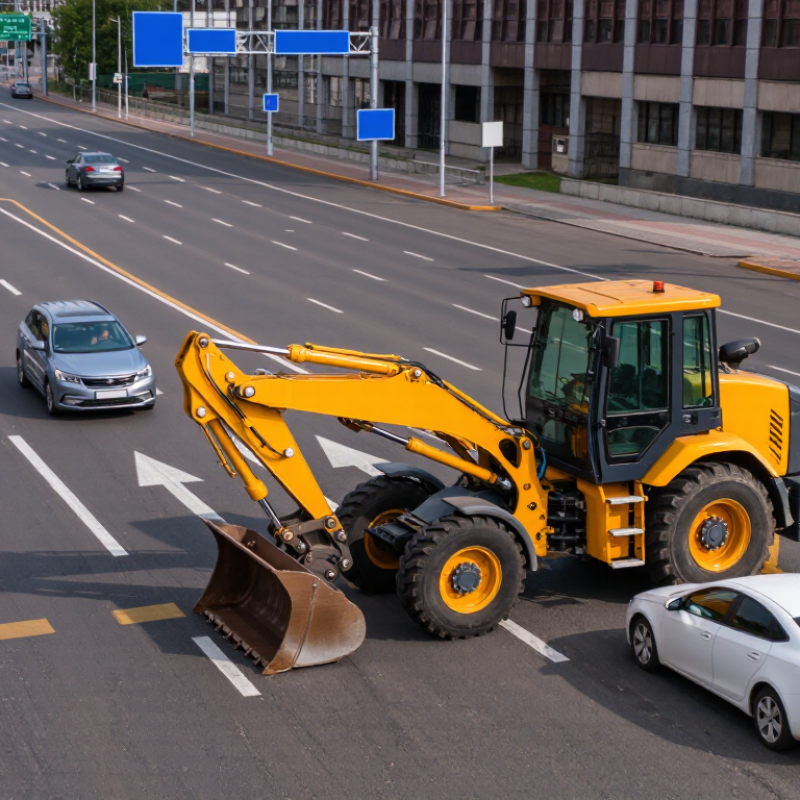
Driving a wheel excavator on public roads is different from operating it inside a controlled construction site. Its rubber tires, articulated steering, hydraulic attachments, and large blind spots create serious risks around cars, cyclists, and pedestrians. A machine may move slowly, yet its boom can swing across a lane and its braking distance can change with the load.

A common question is: “What license is required to drive a wheel excavator on the road?” The honest answer depends on the country, state, or local authority. Some places require a commercial driver’s license, while others require a construction equipment operator certificate, a special endorsement, or both. The machine’s weight, maximum road speed, registration class, and intended use can also affect the requirement.

In practice, operators may need more than a driving license. Road registration, insurance, warning signs, lighting, escort vehicles, and a temporary movement permit may apply. The excavator might also need inspection before traveling between job sites. Requirements can change, even between neighboring regions.

Check the rules.

Reliable guidance should come from the local transport department, workplace safety regulator, or an authorized training provider. Manufacturers’ manuals can explain operating limits, but they do not replace legal advice. A careful operator confirms the route, checks mirrors and lights, secures the attachment, and keeps the boom within the approved travel position.

The details matter. Mistakes happen. This article explains why licensing exists, which qualifications may be requested, and how to verify the correct requirements before taking a wheel excavator onto public roads.
Why Do You Need a License to Drive a Wheel Excavator on the Road?

What Is a Wheel Excavator and How Is It Used on Public Roads?

A wheel excavator is a mobile digging machine fitted with rubber tires, a boom, an arm, and a bucket. Unlike a tracked excavator, it can travel between worksites without a transport trailer. Operators use it for trenching, drainage, road maintenance, utility repairs, and material handling. On public roads, however, it becomes more than construction equipment. It is also a large road vehicle with limited visibility and a wide turning path.

A road license is usually required because public-road driving involves risks beyond digging. Requirements vary by country and vehicle classification. Authorities may require an appropriate driving category, operator training, registration, insurance, lighting, mirrors, brakes, and a safety inspection. The European Commission reported about 20,400 road deaths across the European Union in 2023. That figure covers all road users, but it shows why machine control cannot be treated casually. Slow movement still creates danger.

Worksite competence is not always the same as road competence. The U.S. Bureau of Labor Statistics recorded 1,942 fatal transportation incidents in 2023, within 5,283 fatal occupational injuries. A wheel excavator operator should check tire condition, steering response, attachments, warning lights, and blind spots before entering traffic. Keep the bucket low. Expect impatient drivers. Some operators learn this only after a close call. That is a weakness in training, not a badge of experience. A practical road assessment can reveal habits that classroom instruction misses.

Which Driving License Is Required for a Road-Going Wheel Excavator?

Which Driving License Is Required for a Road-Going Wheel Excavator?

A road-going wheel excavator usually needs more than an operator certificate. The required driving license depends on its registered weight, road speed, and local vehicle classification. In many regions, a standard car license may cover lighter machines, while heavier models require a commercial or heavy-vehicle license. Some authorities also require a specific endorsement for mobile construction equipment.

Do not confuse driving permission with machine-operation training. An operator certificate shows that you can control the excavator safely on a worksite. It may not allow you to drive the machine on public roads. Registration, road insurance, approved lighting, warning equipment, and a valid inspection may also be necessary. Ask the local transport authority before moving the excavator between sites. Rules can change by province, state, or country.

Check the machine documents carefully. The listed gross weight matters, especially when attachments or a loaded bucket increase the total mass. Secure the boom, lower the bucket, check tire pressure, and test the brakes before departure. Keep mirrors and lights clean. It sounds simple. It is not. I have seen operators focus on the license and overlook route restrictions, bridge limits, or poor visibility at junctions. That mistake can turn a short trip into a serious safety problem. A written confirmation from the licensing office is more reliable than informal advice.

Why Licensing Ensures Operator Skill and Public Safety

A wheel excavator becomes a serious road vehicle when it leaves the worksite. Its high center of gravity, articulated movement, and limited rear visibility create risks for drivers, cyclists, and pedestrians. A road-use license checks whether an operator understands braking distance, traffic signals, blind spots, and safe positioning. It is not just paperwork.

The U.S. Bureau of Labor Statistics recorded 1,942 fatal transportation incidents in 2023, representing 38.2% of all fatal workplace injuries. These figures cover many occupations, not excavators alone, but they show how quickly vehicle movement can become deadly. The Health and Safety Executive also identifies workplace transport as a persistent cause of serious and fatal incidents. Training must include public-road behavior, not only digging technique. Small details matter. Mirrors adjusted. Boom secured.

Licensing also creates a practical accountability trail. A competent operator should inspect tires, lights, brakes, warning devices, and attachments before departure. They should know when wet roads, slopes, or poor visibility make travel unsafe. In real operations, experienced workers still make imperfect judgments. A rushed crossing can defeat good training. That weakness deserves honest review. Licensing cannot remove every hazard, but verified skills give employers and road users a stronger layer of protection.

Why Do You Need a License to Drive a Wheel Excavator on the Road? — Why Licensing Ensures Operator Skill and Public Safety
Safety and Legal Dimension Typical Requirement Skill or Knowledge Demonstrated How Licensing Protects the Public
Road-vehicle authorization The operator may need a road-driving license, an additional heavy-vehicle entitlement, or a special permit, depending on the machine and local law. Knowledge of traffic rules, road positioning, signaling, speed control, and vehicle responsibilities. Helps ensure that a large, slow-moving machine is operated legally and predictably among cars, bicycles, motorcycles, and pedestrians.
Construction-equipment competence Many jurisdictions or employers require documented training and assessment for operating mobile construction equipment. Safe use of steering, brakes, hydraulic controls, attachments, stabilizers, and operating systems. Reduces the likelihood of loss of control, incorrect attachment use, struck-by incidents, and damage to nearby property.
Vehicle size and mass Width, height, total mass, axle loading, and turning dimensions must comply with applicable road limits or be covered by an oversize or special-movement permit. Ability to check machine dimensions, route restrictions, clearances, bridge limits, and load distribution before travel. Prevents collisions with bridges, signs, buildings, roadside objects, and other vehicles, while reducing road and infrastructure damage.
Visibility and blind spots The machine must use legally required lighting, reflectors, mirrors, warning devices, and other visibility equipment where applicable. Recognition of restricted sight lines and correct use of mirrors, cameras, spotters, and communication procedures. Improves detection of pedestrians, cyclists, small vehicles, and traffic approaching from the sides or rear.
Braking and stopping distance The operator must understand the machine’s braking performance and maintain a safe speed for its mass, road condition, gradient, and traffic. Controlled acceleration, braking, downhill travel, cornering, and safe following distance. Lowers the risk of rear-end collisions, rollovers, jackknifing, and uncontrolled movement at intersections or on slopes.
Roadworthiness checks Pre-use inspections commonly cover tires, steering, brakes, lights, mirrors, warning systems, leaks, and securing of attachments. Ability to identify defects and prevent a machine with a critical safety fault from entering public traffic. Reduces failures such as tire blowouts, brake loss, defective lights, falling components, and hydraulic leaks on the road.
Attachment and equipment security Buckets, tools, booms, and other components must be positioned, locked, lowered, or secured according to the machine manual and local rules. Understanding of safe travel configuration, center of gravity, clearance, and attachment locking procedures. Prevents attachments from swinging into traffic, striking people, obstructing visibility, or falling during movement.
Pedestrian and vulnerable-road-user protection Operators must follow local right-of-way rules and use additional controls when visibility is limited or roads are congested. Safe maneuvering near crossings, cycle lanes, work zones, parked vehicles, and crowded areas. Provides extra protection for people who may be difficult to see from the operator’s seat.
Route planning The planned route may need to account for height restrictions, weight limits, road classifications, gradients, traffic conditions, and permit conditions. Ability to evaluate whether the machine can safely travel between worksites without unsuitable roads or hazardous maneuvers. Reduces unexpected obstructions, emergency stops, unsafe turns, congestion, and conflicts with other road users.
Insurance and accountability Road use commonly requires appropriate registration, insurance, and compliance documentation; exact requirements vary by jurisdiction. Awareness of legal responsibilities, reporting duties, and the limits of the operator’s authorization. Creates accountability and encourages employers and operators to maintain competent, properly authorized road use.
Emergency response Operators should know how to stop safely, isolate the machine, warn traffic, and report breakdowns or incidents. Correct response to mechanical failure, collision, blocked lanes, hydraulic problems, or loss of visibility. Limits secondary collisions and helps protect the operator, passengers, emergency personnel, and passing traffic.
Continuing competence Refresher training or reassessment may be required by employers, regulators, or site risk assessments, especially after a long period without operation. Maintained knowledge of changing traffic rules, equipment controls, safety procedures, and lessons learned from incidents. Helps prevent skill deterioration and promotes consistent safe behavior throughout the machine’s service life.
Important: A license to operate construction equipment does not automatically authorize public-road travel. The required license, registration, insurance, inspection, lighting, dimensions, and permits depend on the machine’s specifications and the laws of the country or region where it is driven.

How Road Regulations Apply to Wheel Excavator Operation

Why Do You Need a License to Drive a Wheel Excavator on the Road?

How Road Regulations Apply to Wheel Excavator Operation

A wheel excavator becomes a road vehicle when it travels beyond a controlled worksite. Road regulations then apply, not only construction rules. The required licence category depends on the machine’s weight, design, speed, and country. Registration, insurance, approved lighting, mirrors, brakes, and visible markings may also be required. A site-only operator card may not authorize public-road driving. That distinction matters.

In practice, authorities assess whether the operator can control a tall, heavy machine among cars, cyclists, and pedestrians. They may check roadworthiness, maximum dimensions, axle loads, and attachment security. Some routes require advance permission, travel restrictions, or an escort.

The European Commission recorded 20,653 road deaths across the European Union in 2022. Its road-safety data shows why vulnerable road users need stronger controls. A slow machine can still create serious blind-spot risks.

The UK Department for Transport reported 1,624 road deaths in Great Britain during 2023. Those figures include many road environments, not excavators alone. However, they underline the consequences of weak visibility and poor separation.

Operators should inspect mirrors, cameras, tyres, warning lamps, and attachment locks before departure.

Employers should verify licences and training records, rather than relying on experience alone.

Rules can feel excessive. They are not always intuitive. Yet local requirements differ, and that gap deserves careful checking before the first wheel turns.

What Penalties Can Result from Driving Without the Proper License?

Driving a wheel excavator on public roads usually requires more than operating skill. The required licence depends on vehicle weight, road classification, country, and the machine’s registration. A site qualification may not cover public-road driving. Local transport authorities normally decide the correct category. This distinction is easy to miss, especially when a machine travels only between nearby sites.

The penalties can be serious. Authorities may issue fines, penalty points, or a driving ban. They may also stop the machine from continuing and require recovery from the road. If a collision occurs, inadequate licensing can complicate insurance claims and employer liability. Serious injuries may lead to prosecution under transport or workplace-safety laws. The World Health Organization’s Global Status Report on Road Safety 2023 estimates 1.19 million road deaths each year. HSE recorded 51 worker fatalities in UK construction during 2023/24. These figures do not prove every unlicensed journey is dangerous. They do show why regulators treat mobile machinery carefully. A permit alone is not enough.

Tips: Check the machine’s registration documents and permitted road category. Confirm the operator’s licence in writing with the local authority. Inspect brakes, lights, mirrors, tyres, and warning equipment before departure. Keep a copy of training records in the cab. One overlooked detail can become an expensive mistake. I would also question informal advice from a previous job; rules and machine classifications can change.

FAQS

What is a wheel excavator?

It is a digging machine mounted on rubber tires. It has a boom, arm, and bucket. It can travel between worksites without a trailer.

How are wheel excavators used on public roads?

Operators use them for road maintenance, trenching, drainage, utility repairs, and material handling. Road travel requires extra control around traffic.

Do I need a licence to drive one on public roads?

Usually, yes. The required licence depends on the machine’s weight, speed, design, and local rules.

Is a site operator card enough for road driving?

Not always. A site card may not authorize public-road travel. Check the correct driving category with local authorities.

What equipment may be required before road travel?

Requirements may include registration, insurance, mirrors, lights, brakes, markings, and safety inspections. Attachment locks may also need checking.

What should an operator inspect before leaving the worksite?

Check tires, steering, mirrors, cameras, warning lights, brakes, and attachment security. Keep the bucket low. Check twice.

Why is road driving different from worksite operation?

Public roads include cars, cyclists, and pedestrians. The machine has blind spots and a wide turning path. Visibility changes.

Can a slow wheel excavator still be dangerous?

Yes. Slow movement does not remove collision risks. A tall machine can hide nearby people and vehicles.

Are route permissions or escorts sometimes necessary?

They can be. Authorities may restrict routes, dimensions, axle loads, or travel times. Some journeys require advance permission or an escort.

Is experience enough to prove road competence?

No. Worksite experience may not show safe traffic control. A practical road assessment can reveal habits classroom training misses. Close calls should prompt reflection.

Conclusion

A wheel excavator is a versatile construction machine designed to dig, lift, and move materials while traveling between work sites on paved roads. Because it is larger, heavier, and more complex than a normal passenger vehicle, operating it on public roads requires appropriate training and authorization. The key question is: “What license is required to drive a wheel excavator on the road?” The answer depends on the machine’s weight, speed, road classification, and local regulations. In many areas, operators may need a commercial or specialized heavy-vehicle license, along with machine-specific certification and registration.

Licensing helps confirm that the operator understands steering, braking, visibility limits, attachments, load control, and safe interaction with other road users. Road regulations may also require lighting, warning signs, insurance, inspections, and restrictions on travel routes or times. Driving without the proper license can lead to fines, removal from the road, equipment delays, insurance problems, or suspension of operating privileges. Checking the requirements of the relevant local authority before traveling is essential for safe and compliant operation.

Henry

Henry

Henry is a dedicated marketing professional with a profound expertise in the company's offerings. With years of experience in the industry, he possesses an impressive understanding of the market dynamics and consumer behaviors that drive success. Henry is committed to sharing his insights through......